

Puberty can feel like someone quietly swapped out your teen’s “settings.” One week, they seem fine, the next, they are teary, snappy, overwhelmed, or suddenly anxious about things that never bothered them before. These mood swings and anxiety signals are among the most common reasons NYC parents start asking questions. For many NYC families, the hardest part is not the mood itself, it’s the uncertainty: Is this normal teen stuff, or is something starting that deserves real support?
Hormonal transition is only one piece of the puzzle. In adolescence, the brain is still building stronger “pause and plan” skills, sleep timing shifts later, school pressure rises, and social life gets more intense. Put together, it can look like mood swings, anxiety, depression, or ADHD (especially for girls, who are often missed).
Teen mood swings or an anxiety disorder?
Moodiness is common in teens. Anxiety disorders are also common, and they can hide behind irritability.
A helpful way to think about it is this: normal mood swings tend to be brief and bounce back, while clinical anxiety tends to stick around, spread to multiple areas of life, and start shrinking your teen’s world.
The National Institute of Mental Health (NIMH) describes anxiety as more than occasional worry; it’s a persistent fear or worry that interferes with daily life (NIMH).
Here’s a practical “pattern check” many parents find useful:
| What you’re noticing | More likely normal transition | More likely needs evaluation |
|---|---|---|
| Duration | Comes and goes, improves with rest or a good day | Most days for weeks, hard to shake |
| Intensity | Big feelings, but still recoverable | Meltdowns, panic-like episodes, constant tension |
| Function | Still doing school, friends, activities (even if grumpy) | Grades drop, school avoidance, social withdrawal |
| Triggers | Clear triggers (fight with a friend, big test) | Worry shows up “out of nowhere,” and becomes generalized |
| Body signs | Occasional headaches or stomachaches | Frequent physical complaints tied to stress or avoidance |
If you want a deeper guide focused on subtle teen presentations (especially irritability, shutdown, perfectionism, and sleep/appetite shifts), this related resource may help: Teen anxiety or depression? Subtle signs NYC parents often miss (and what helps).
Why puberty changes emotional regulation
When teens say, “I don’t know why I’m so mad,” they are often telling the truth.
During puberty, hormones and brain development are happening at the same time:
- Hormonal changes can make emotions feel closer to the surface.
- The brain systems that react quickly to stress and social cues can be extra sensitive.
- The systems that help with impulse control, perspective, and recovery are still maturing.
This is one reason adolescence can come with faster emotional “spikes” and slower “cool-downs.” Research on adolescent brain development describes this uneven timing between emotion/reward circuits and control circuits as a normal part of development (NIH/NCBI).
What this can look like at home:
- Your teen seems fine all day, then falls apart over one comment.
- Conflict gets intense quickly.
- They regret what they said, but feel embarrassed and double down.
You do not have to “win” these moments. Often, the goal is to reduce shame, lower the temperature, and look for patterns (sleep, stress, cycle timing, social conflict, academic overload).
ADHD symptoms during adolescence in girls
Adolescence is a common time for girls to get overlooked or newly noticed.
Why? Middle school and high school demand more self-management: long-term assignments, juggling multiple teachers, faster pacing, and more social pressure. Many girls with ADHD have been “getting by” through effort, people-pleasing, and anxiety-driven overcompensation. Then puberty hits, expectations rise, and the whole system can start to wobble.
Common ADHD-in-girls clues families describe:
- “She can focus for hours on what she likes, but melts down over homework.”
- Chronic overwhelm, messy backpack, missing small instructions.
- Emotional reactivity that looks like moodiness rather than attention.
- Perfectionism and procrastination live side-by-side.
- Social exhaustion from masking all day.
For teens who menstruate, some families also notice attention, irritability, or anxiety fluctuate across the cycle. That does not automatically mean ADHD, but it’s useful data to bring to an evaluation.
If this topic resonates, you may appreciate our related page and video announcement: ADHD in women (many of the same “missed signs” apply to teen girls).
When the question is “Is it ADHD, anxiety, a learning issue, or all of the above?”, testing can reduce guesswork:
- Private ADHD testing in NYC
- Could ADHD or a learning disability be holding you back? How psychoeducational testing can help
- Neuropsychological testing explained: what it is, who it helps, and what to expect
When irritability in teens needs evaluation
Irritability is one of the most confusing symptoms for parents because it can mean many things: stress, sleep deprivation, anxiety, depression, ADHD, trauma, substance use, or even a medical issue.
It’s worth getting an evaluation when irritability becomes persistent, impairing, or scary.
Red flags that tend to matter more than any single bad day:
- Irritability lasts weeks and is becoming the “default mood.”
- School refusal, frequent absences, or sudden academic decline
- Isolation from friends, quitting activities they used to enjoy
- Explosive anger that feels out of proportion, especially with regret afterward
- Self-harm, suicidal thoughts, or talk of not wanting to be here (urgent)
- Increased vaping, cannabis, alcohol, or risky behavior
For a safety-focused guide for NYC families, see: Vaping, weed, alcohol, self-harm: when it’s a mental health emergency. If you’re worried about immediate danger in the US, you can call or text 988 for the Suicide & Crisis Lifeline.
If you want a teen-specific lens on depression that doesn’t look like “sadness,” this is a helpful companion read: Teen depression isn’t always sadness: hidden symptoms to watch for.
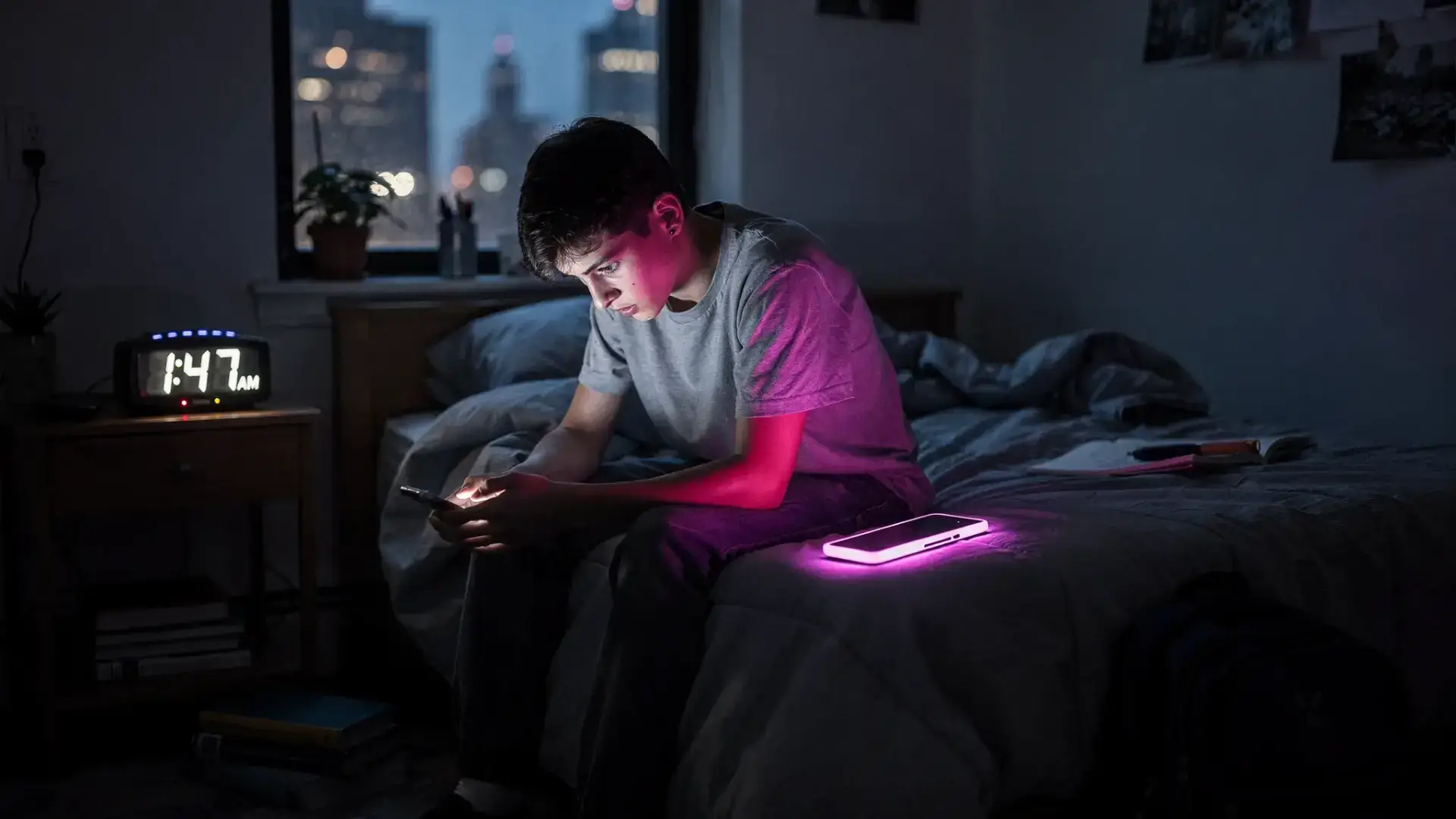
Sleep cycle shifts in teenagers and mental health
A lot of teen “mental health” complaints are made worse by one very real thing: teen sleep timing naturally shifts later.
Many teens are not choosing to stay up late; their biology is nudging them that way. The American Academy of Pediatrics has noted that early school start times can conflict with adolescents’ sleep needs and contribute to sleep deprivation (AAP). The NIH also highlights the wide mental and physical impacts of inadequate sleep (NIH).
When sleep is off, everything gets louder:
- Anxiety feels more urgent
- Mood drops faster
- ADHD symptoms look worse
- Frustration tolerance shrinks
Here are teen sleep patterns that commonly show up in NYC households, plus realistic supports:
| Sleep pattern | How it can feel for your teen | What often helps |
|---|---|---|
| “Second wind” at 10 to 11 pm | Wide awake when it’s finally quiet | Consistent wake time, earlier wind-down, dim lights |
| 2 am bedtime, brutal mornings | Constant conflict, missed the first period | Gradual schedule shift, morning light, limit late naps |
| Sleep looks long but is not refreshing | Foggy, irritable, anxious | Screen boundaries, evaluate for insomnia/anxiety |
If sleep has become the main battleground, you might also like: Can sleep heal more than we think?
What getting help can look like in Midtown Manhattan, or online
Families often worry that an evaluation will be cold, rushed, or label-focused. A good assessment should feel like the opposite: curious, thorough, and relieving, like someone finally sees the whole picture.
At Dr. Iospa Psychiatry Consulting, care can include a collaborative team approach, depending on what your teen needs:
- Psychiatric evaluation and, when appropriate, medication management
- Therapy referrals (including skills-based approaches like CBT or DBT)
- Neuropsychological assessment when attention, learning, concussion/brain injury history, or cognitive concerns are part of the story: What is a neuropsychological evaluation?
If you are curious about brain-based skill-building approaches that can support attention and emotional control, you can also explore our YouTube resource: the Cognitive Remediation Therapy (CRT) video series.
A grounded next step that doesn’t escalate everything
If you’re not sure what you’re seeing, try a two-week “pattern log” before you decide it’s all hormones or all mental health:
- Sleep and wake times (including weekend shifts)
- Big stressors (tests, friendship conflict, practices)
- Irritability (0 to 10) and what helped it come down
- Screens late at night
- For menstruating teens, cycle days and symptom spikes
Bring that data to a clinician. It can turn a vague worry into a clear plan.
This article is for educational purposes only and is not medical advice. Reading this information does not create a doctor-patient relationship. Decisions about treatment or medication should be made with your own clinician, who can take into account your personal history.
Clinically Reviewed By Dr. Yana Serobyan, MD, DO, DABPN