

Grades rarely drop “out of nowhere.” More often, the decline is the first visible sign of an underlying problem with attention and executive function, the mental skills that help a child start tasks, stay organized, manage time, and follow through.
For many NYC families, the pattern looks familiar: homework battles that stretch late into the evening, missing assignments despite obvious intelligence, teacher emails about incomplete work, and a teen who insists “I’m trying” while their planner and backpack tell a different story.
When school performance falls, and day-to-day functioning starts to unravel, it may be time to consider a Psychoeducational or Neuropsychological evaluation in NYC or a broader child and adolescent psychiatric assessment to clarify what is really going on, and what support will actually help.
Academic decline is often an executive function problem (not a motivation problem)
Executive functions are the brain’s management system. They coordinate attention, planning, impulse control, working memory, and emotional regulation. When these skills lag behind academic demands, grades can fall quickly, especially during transitions like:
- Moving from elementary to middle school (more teachers, more deadlines)
- Starting high school (more independence, higher stakes)
- Advanced classes (more reading, long-term projects)
- Increased extracurricular load (less margin for error)
A child can be bright, verbal, and even “good in class,” but still struggle to:
- Turn in completed work
- Start homework without repeated prompting
- Break down long assignments
- Study consistently instead of cramming
- Keep track of materials and due dates
This is why families often describe the problem as “everything is falling through the cracks.” That experience maps closely onto executive dysfunction in teens and older children.
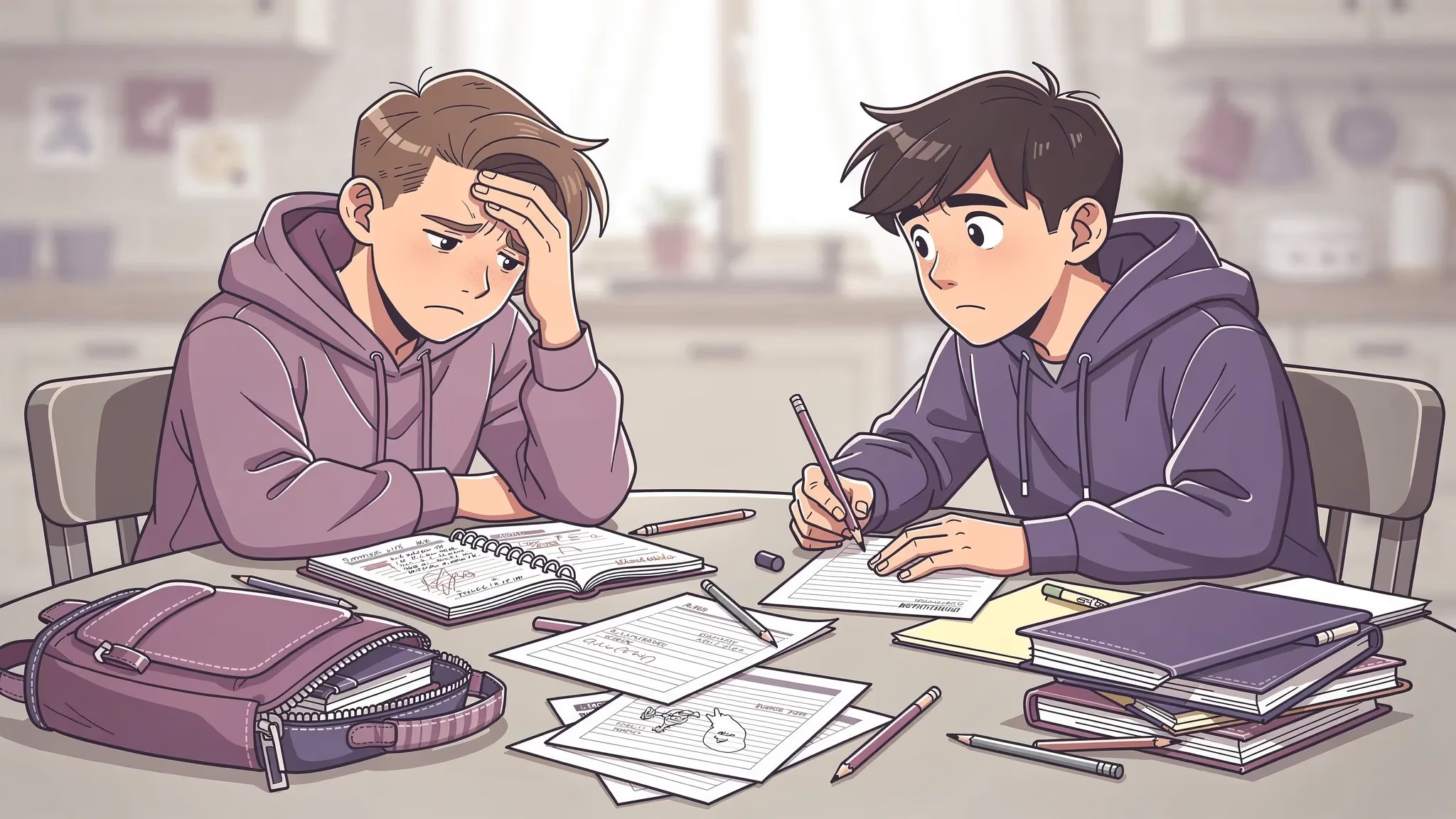
Signs your child may need ADHD or executive function support
Occasional forgetfulness is normal. The concern is persistence, intensity, and impact across settings (home, school, activities). Here are high-signal patterns that often bring families to a child-focused psychiatric or neuropsychological evaluation.
School-based “attention problems” that show up in teacher feedback
Teacher concerns are often the earliest objective clue, especially when multiple teachers report similar issues.
Common examples of attention problems at school include:
- Seems to “daydream,” misses instructions, and needs frequent redirection
- Makes careless mistakes, rushes through work
- Difficulty working independently
- Struggles to sustain focus during reading or multi-step math
- Inconsistent performance (aces one day, collapses the next)
Homework battles and the after-school crash
Many kids hold it together at school and melt down at home. The effort of constant self-control can lead to irritability, shutdown, or tears once they are in a safe space.
Look for patterns like:
- Takes hours to do what should take 30 to 60 minutes
- Needs a parent “on top of them” the entire time
- Becomes emotionally dysregulated when asked to begin
- Avoids tasks until late at night (then panic completes them)
Missing assignments, disorganization, and “I forgot” on repeat
Executive function difficulties often look like poor follow-through rather than poor comprehension.
Common red flags include:
- Completed homework never makes it to the teacher
- Frequent lost items (books, earbuds, jackets, sports gear)
- Messy backpack, chaotic desk, no system that sticks
- Underestimates the time required, starts too late
ADHD is common, but not the only explanation
Academic decline plus inattention can be ADHD, but it can also be anxiety, depression, sleep deprivation, a learning disorder, or a mismatch between demands and skill development.
A careful evaluation should rule in and rule out the most likely drivers, because treatment differs.
A quick guide: what the symptoms may be telling you
| What you’re seeing | What it can reflect | Why it matters |
|---|---|---|
| Missing assignments, messy materials, time blindness | Executive function weakness (often ADHD-related) | Needs skills support, accommodations, and possibly ADHD treatment |
| Slow reading, avoids writing, strong verbal skills, but low test scores | Learning disorder (reading, writing, math) | Needs targeted academic interventions and school supports |
| Perfectionism, procrastination, and stomachaches before school | Anxiety | Can mimic inattention, often needs CBT and school coordination |
| Low motivation, fatigue, irritability, and social withdrawal | Depression | Concentration drops when mood drops, treatment focus changes |
| Late nights, daytime sleepiness, weekend “sleep catch-up.” | Sleep problems | Sleep loss can worsen focus, memory, and emotion regulation |
If you are unsure which column applies, an ADHD evaluation in NYC or a comprehensive child and adolescent assessment is designed to clarify.
When a child and adolescent psychiatrist can be especially helpful
Many families start with a pediatrician or school meeting, which is appropriate. Consider adding a child and adolescent psychiatrist (or a psychiatric team experienced with youth ADHD and learning concerns) when:
- Grades are dropping, and the decline is rapid or unexplained
- Your child’s difficulties span both school performance and daily life functioning
- There are emotional symptoms alongside attention issues (anxiety, mood changes, panic symptoms)
- Behavioral strategies have not been enough
- You are considering medication and want careful, developmentally informed guidance
- There are complicating factors such as concussion/brain injury history, medical conditions, or complex comorbidities
A psychiatric evaluation can also help differentiate ADHD from conditions that can look similar, including anxiety disorders, depression, trauma-related symptoms, and certain sleep disorders.
If you notice any safety concerns (self-harm statements, suicidal thoughts, severe aggression, or inability to function day-to-day), seek urgent help immediately (call 988 in the US for the Suicide & Crisis Lifeline, or go to your nearest emergency room).
What an ADHD evaluation in NYC typically includes, and what parents can do beforehand.
The best evaluations combine clinical expertise with structured data. While exact steps vary, a comprehensive neuropsychological assessment often includes:
- Parent and child interview (developmental, medical, academic, and emotional history)
- Symptom review across settings (home, school, peers)
- Standardized rating scales completed by parents and teachers
- Review of report cards, testing, and teacher comments
- Screening for anxiety, depression, sleep issues, and learning concerns
If you are preparing for an appointment, it helps to gather a small “packet” of real-world evidence. This reduces guesswork and shortens the time to effective recommendations.
Helpful items to bring include:
- Recent report cards and teacher emails
- A list of missing assignments patterns (which classes, what types of tasks)
- Any prior school testing (IEP/504 evaluations)
- Notes on sleep schedule, screen use, and morning routine
- Family history of ADHD, anxiety, depression, or learning disorders
If you are exploring private testing options, this guide to private ADHD testing in NYC explains what a structured evaluation process entails and who it can help.
When neuropsychological testing is appropriate, especially in cases of academic decline.
If the question is not only “Is this ADHD?” but also “Why is school getting harder and what are the specific cognitive bottlenecks?”, a neuropsychological evaluation can be extremely helpful.
Neuropsychological testing measures cognitive domains that map directly onto academic performance, such as:
- Attention and working memory
- Processing speed
- Executive functioning
- Language and learning skills
- Visual-spatial skills
- Emotional and behavioral factors that interfere with performance
These results can guide targeted interventions and support documentation for accommodations.
To learn what the process covers and how it differs from informal screening, see What Is Neuropsychological Evaluation?
Treatment is not one-size-fits-all: support the brain skills, not just the grades
Once you understand the “why,” the goal is to develop a plan that improves real-world performance, not just short-term compliance. For many children and teens, a blended approach works best.
Skills and strategy support for executive dysfunction
Executive function support can include:
- Building external systems (one planner system, one “launch pad” at home)
- Reducing friction for task initiation (clear first steps, timed work blocks)
- Teaching prioritization and time estimation
- Coaching around long-term projects and studying
In some cases, Cognitive Remediation Therapy (CRT) or structured cognitive skills work may be recommended, especially when attention and cognitive control are major bottlenecks.
Psychotherapy for stress, avoidance, and emotional regulation
When academic decline triggers anxiety, shame, or conflict, therapy can reduce the emotional load that keeps kids stuck.
Evidence-based modalities like CBT and DBT-informed skills can help with:
- Avoidance and procrastination cycles
- Performance anxiety
- Emotional outbursts during homework
- Self-esteem takes a hit from repeated “failures.”
School collaboration (often the missing piece)
Even great treatment can fail if the school environment continues to demand skills your child is still building.
Depending on your child’s needs, recommendations may include:
- 504 Plan accommodations (extended time, reduced distractions, organizational supports)
- IEP evaluation if learning needs are significant
- Teacher check-ins or a weekly missing-work report
- Reduced homework volume when appropriate
If your child’s academic profile suggests possible learning differences alongside attention issues, psychoeducational testing can help clarify both. (This practice covers that topic in depth in their article on psychoeducational testing for ADHD and learning disabilities.)
Medication management when appropriate
For children and teens with diagnosed ADHD, medication can be a meaningful part of care, especially when symptoms significantly impair learning and daily functioning.
Clinical guidelines from the American Academy of Pediatrics emphasize evidence-based treatment that may include medication and behavioral interventions, adjusted for age and individual circumstances.
Medication decisions should be personalized, monitored, and revisited as your child’s demands change across the school years. A psychiatric clinician can help families weigh benefits, side effects, and expectations, and coordinate medication management with therapy and school supports.
Why early support matters, especially in NYC’s high-pressure academic environment.
NYC students often face a perfect storm: heavy workloads, long commutes, competitive programs, and constant digital distraction. When executive function is shaky, kids can internalize the problem as “I’m lazy” or “I’m stupid,” even when the true issue is a skills gap.
Early identification can prevent common downstream effects:
- Anxiety driven by chronic underperformance
- Depressive symptoms from repeated negative feedback
- Family conflict around schoolwork
- Risk-taking or avoidance behaviors in teens
The CDC notes that ADHD is one of the most common neurodevelopmental conditions of childhood, and a comprehensive evaluation is key to appropriate support. See the CDC overview on ADHD in children.
Frequently Asked Questions
How do I know if my teen has executive dysfunction or is just unmotivated? Executive dysfunction is characterized by a consistent pattern of difficulty initiating, organizing, prioritizing, and following through, even when the teen cares about the outcome. You may see last-minute panic, missed steps, and time blindness rather than deliberate refusal. A structured evaluation can clarify whether ADHD, anxiety, depression, sleep issues, or learning differences are contributing.
Can anxiety cause attention problems at school? Yes. Anxiety can pull attention inward (worry, perfectionism, fear of mistakes), which looks like distractibility, slow work completion, or avoidance. This is why a good ADHD evaluation also screens for anxiety and mood.
Should we start with neuropsychological testing or a psychiatric evaluation? It depends on the question. If the primary goal is diagnostic clarity around ADHD and treatment planning (including whether medication is appropriate), a psychiatric evaluation can be a strong first step. If academic decline raises questions about learning disorders, cognitive strengths/weaknesses, or documentation of accommodations, neuropsychological or psychoeducational testing may be especially helpful. Many families benefit when both are coordinated.
What if my child earns good test scores but fails classes due to missing assignments? That pattern often points to executive function challenges rather than a knowledge problem. Support may focus on organizational systems, school accommodations, and ADHD treatment when indicated.
Do ADHD symptoms look different in middle school and high school? Often, yes. As workload and independence increase, teens may struggle more with planning, long-term projects, and self-management. Hyperactivity may be less obvious, while disorganization, procrastination, and emotional dysregulation become more prominent.
Next step: get clarity and a plan you can implement
If your child’s grades are dropping, homework has become a nightly struggle, or you are hearing repeated concerns from teachers about focus and follow-through, a comprehensive evaluation can replace guesswork with a clear roadmap.
Dr. Iospa Psychiatry Consulting provides personalized psychiatric and psychological care in Midtown Manhattan and online, including evaluation for attention and executive function concerns. You can learn more about their approach to private ADHD testing in NYC and how cognitive profiling, through neuropsychological evaluation, works. If you are ready to discuss next steps, visit Comprehensive Psychiatric Services in NYC to explore care options and request an appointment.
Educational content only and not a substitute for medical advice. If you are concerned about your child’s safety, seek urgent support right away.