
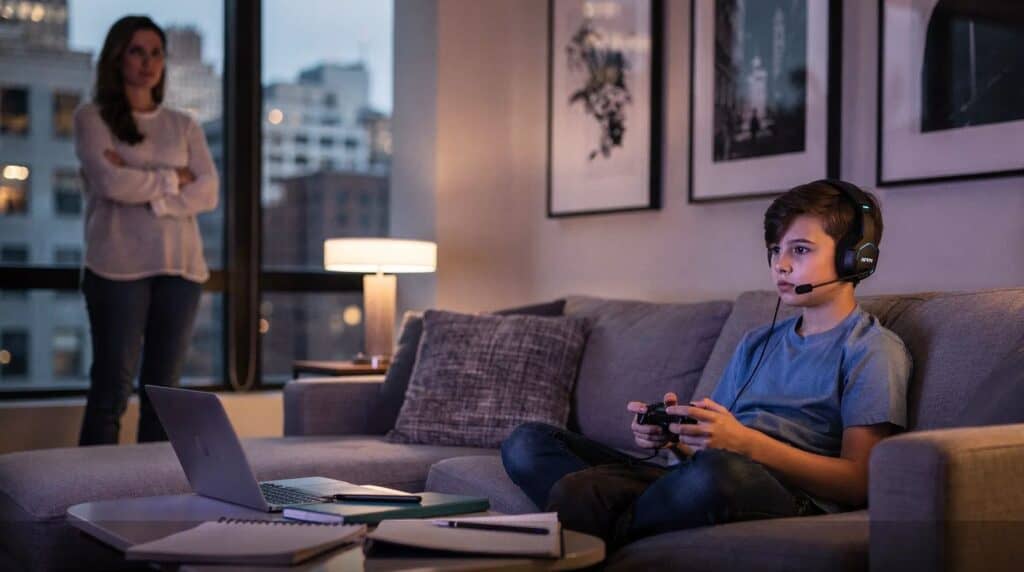
Gaming is a normal part of teen life for many NYC families. It can be social, creative, and even stress-relieving. The concern starts when gaming becomes the main way a teen copes, crowds out sleep and school, and leads to secrecy, conflict, or emotional volatility. In our Midtown Manhattan practice, families often describe a shift from “a hobby” to “a daily battle” that can overlap with anxiety, depression, ADHD, vaping, and, in some cases, self-harm.
This guide explains the most common signs of problematic gaming in teens, what to watch for in NYC, and when to seek a professional evaluation, including urgent help.
Problematic gaming vs normal gaming (what clinicians look for)
There is no single “magic number” of hours that defines an addiction. Clinically, the key question is functioning: is gaming interfering with school, sleep, relationships, mood stability, or health?
Two widely cited clinical frameworks help clinicians think about this:
- The World Health Organization (WHO) recognizes “gaming disorder” in the ICD-11, focusing on impaired control, increasing priority given to gaming, and continuation despite negative consequences. (WHO ICD-11)
- The American Psychiatric Association (APA) includes “Internet Gaming Disorder” as a condition for further study in DSM-5, reflecting ongoing research and a growing clinical need. (APA overview)
Not every teen who games a lot meets the criteria for a disorder. Many teens temporarily increase gaming during transitions (new school, a breakup, a move, exam season). What matters is whether the pattern is persistent and impairing.
Signs that gaming may be becoming problematic in teens
Parents typically notice a cluster of changes rather than a single dramatic event. Common signs include:
- Loss of control: “Just 20 minutes” turns into hours, repeated failed attempts to cut back.
- Gaming becomes the top priority: hobbies, sports, friends, and even eating or showering fall away.
- Strong emotional reactions when interrupted: intense irritability, rage, panic, or shutting down.
- Sleep disruption: late-night gaming, difficulty waking, missing school, day-night reversal.
- Academic decline or disengagement: falling grades, incomplete assignments, chronic lateness.
- Social withdrawal: less in-person contact, isolation, “my online friends are my only friends.”
- Secrecy and conflict: lying about time spent, sneaking devices, escalating family fights.
- Mood shifts: increased anxiety, low mood, hopelessness, or emotional numbness outside of gaming.
- Using gaming to escape, especially from bullying, academic pressure, or social anxiety.
In NYC, families may also see gaming expand when teens feel overwhelmed by competitive school environments, long commutes, or limited private space at home.
Why problematic gaming can raise the stakes (self-harm, vaping, and substance use)
Problematic gaming rarely exists in isolation. It often overlaps with:
Depression, anxiety, and panic symptoms
Gaming can become a short-term “off switch” for anxiety or sadness, but the long-term costs (sleep loss, conflict, isolation) can worsen symptoms. If you are noticing persistent irritability, withdrawal, or hopelessness, you may also want to review our guide to subtle teen mood symptoms: Teen anxiety or depression? Subtle signs NYC parents often miss (and what helps).
Teen vaping and mental health
Many parents are surprised to learn that nicotine use can increase baseline anxiety, irritability, and sleep disturbance, which can in turn intensify compulsive coping behaviors, including gaming. For a high-authority overview of youth nicotine risks, see the NIH’s National Institute on Drug Abuse (NIDA) on vaping and nicotine.
If you suspect both nicotine dependence and mood symptoms, it may be appropriate to consider adolescent substance use treatment options alongside psychiatric care, especially when vaping is being used to regulate emotions or focus.
Self-harm and suicidal thinking
Some teens who appear “addicted to games” are actually trying to manage unbearable emotions, shame, or social pain. If you see any of the following, seek immediate professional support:
- Talk of wanting to die, feeling trapped, or being a burden
- Self-injury (cutting, burning) or hidden wounds
- Giving away possessions, writing goodbye messages
- Sudden calm after intense distress
For warning signs and what to do, the National Institute of Mental Health (NIMH) has a clear resource on suicide prevention.
If you are searching for a teen self-harm psychiatrist in NYC, look for a practice that can do a careful diagnostic evaluation, a self-harm risk assessment NYC, and coordinate therapy (often DBT-informed) with medication management when needed.
If you believe your teen is in immediate danger, call 988 (Suicide and Crisis Lifeline) or go to the nearest emergency room.
A quick “red flag” guide for parents (what to track before you call)
Keeping a brief, factual log for 1 to 2 weeks can help a clinician make faster, more accurate decisions, especially if you need an urgent appointment with an NYC teen psychiatrist.
Track:
- Sleep and wake times
- School attendance and missing work
- Gaming hours and what happens when it is interrupted
- Mood symptoms (sadness, anxiety, rage, numbness)
- Vaping, alcohol, cannabis, or other substances
- Self-harm behaviors or statements (even “jokes”)
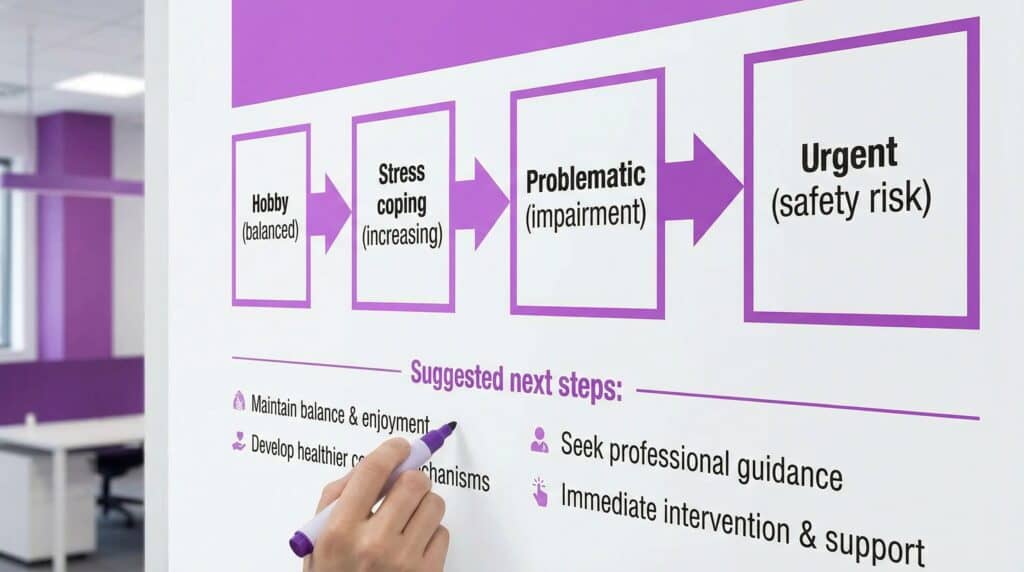
Here is a practical way to sort what is “concerning” vs “urgent”:
| What you notice | Why it matters | Recommended next step |
|---|---|---|
| Gaming is increasing, but your teen still sleeps, attends school, and has real-world interests | May be stress-related coping, not a disorder | Set limits collaboratively, monitor, and consider therapy if anxiety or depression is growing |
| Sleep is disrupted, grades are dropping, fights escalate, and your teen isolates | Functional impairment is developing | Schedule a comprehensive psychiatric evaluation and consider an ADHD or mood assessment |
| Your teen is vaping heavily or using substances to “calm down” or “focus.” | Substance use can worsen mood and impulsivity | Seek coordinated care, consider adolescent substance use treatment, NYC resources |
| Self-harm, suicidal talk, threats, or reckless behavior when gaming is restricted | Safety risk, high impulsivity, and possible mood disorder | Request a crisis psychiatric evaluation, or urgent assessment, use 988 or ER if imminent |
What’s driving the behavior? Common underlying patterns
Problematic gaming is often a symptom of underlying issues or a feedback loop that began with something else. In evaluation, clinicians typically explore:
ADHD and impulsivity
Teens with ADHD can be especially vulnerable to gaming because games provide rapid rewards, novelty, and constant stimulation. When ADHD is untreated, gaming may look like “laziness” or “defiance,” but it can be a brain-based regulation issue.
If attention and organization problems are part of the picture, these pages may help:
- Why your child may need a child and adolescent psychiatrist (academic decline + attention)
- Private ADHD testing in NYC
- Evidence-based non-medication interventions for ADHD
This is also where teen impulsivity treatment becomes relevant, because impulsivity can drive both late-night gaming and risk behaviors like vaping or unsafe online interactions.
Anxiety, perfectionism, and avoidance
Some high-achieving NYC teens use gaming to avoid panic sensations, social fear, or intense academic pressure. If your teen is “fine” only while gaming, that can still be a sign of significant anxiety.
Learning differences and burnout
If gaming ramps up around homework, tests, or writing assignments, consider whether an unrecognized learning disability is present. Psychoeducational testing can clarify this and support accommodations.
What professional help can look like in Midtown Manhattan (and via telehealth in NY)
A strong plan is usually not “just take the console away.” It is a combination of safety, diagnosis, skills, and family support.
1) Comprehensive psychiatric evaluation nd safety planning.
In our setting, an evaluation typically reviews:
- Mood and anxiety symptoms
- ADHD symptoms and executive function
- Sleep, appetite, and energy
- Substance use (including teen vaping mental health impacts)
- Online behavior and social stressors
- Self-harm and suicidal risk
If there are safety concerns, a structured self-harm risk assessment in NYC and a clear safety plan come first.
2) Therapy matched to the driver
Examples include:
- CBT for anxiety, depression, avoidance behaviors, and rigid thinking patterns
- DBT-informed therapy for emotion regulation, distress tolerance, and self-harm behaviors
- Supportive therapy to rebuild motivation and connection
If you want to understand the difference between therapy models and cognitive skills work, see: CBT vs. CRT in Midtown NYC.
3) Medication management when appropriate
Medication is not a “cure for gaming,” but it can be a powerful support if the underlying conditions include ADHD, depression, anxiety, or OCD. The U.S. Food and Drug Administration (FDA) provides up-to-date medication safety information, including mental health medication guides. (FDA medication information)
4) Testing when attention, learning, or cognition is unclear
Neuropsychological or psychoeducational testing can clarify whether gaming is masking a deeper attention or learning issue.
- What is a neuropsychological evaluation?
- Neuropsychological vs psychoeducational testing: what’s the difference?
5) Skills-based cognitive support
For some teens, improving executive function skills reduces the need to “escape” into gaming.
Dr. Dana Haywood’s work on cognitive skills and Cognitive Remediation Therapy (CRT) can be a helpful complement for attention and self-regulation goals:
- Cognitive Remediation Therapy (CRT) video series (links to our YouTube channel)
- ADHD in women (with video by Dr. Dana Haywood)
How to talk to your teen about gaming (without escalating the fight)
Approach matters. Many teens respond better to curiosity than confrontation.
- Start with one observation (not a lecture): “I’m noticing you are up until 3 am gaming and you’re exhausted at school.”
- Ask what gaming is doing for them: “Is it stress relief, social, or a break from feeling bad?”
- Set one measurable goal together (sleep is often the best first target).
- Avoid all-or-nothing bans unless safety requires it. Abrupt removal can worsen agitation in some teens.
- If vaping, cannabis, or self-harm is in the picture, shift to safety and professional help rather than negotiating screen time.
Frequently Asked Questions
Is “gaming addiction” a real diagnosis? The WHO recognizes gaming disorder in the ICD-11, and the APA describes Internet Gaming Disorder as a condition for further study. Clinically, the focus is on whether gaming causes persistent impairment and loss of control.
How do I know if my teen is just stressed or developing a serious problem? Look at functioning: sleep, school attendance, grades, mood stability, relationships, and whether your teen can cut back when needed. A short log of patterns is often very helpful.
Can problematic gaming be related to ADHD? Yes. ADHD can increase vulnerability to high-reward, high-stimulation activities. If attention and executive function issues are present, consider a comprehensive evaluation and, when appropriate, testing.
What if my teen is vaping and gaming constantly? Nicotine can worsen anxiety, irritability, and sleep, and it can interact with impulsivity and mood symptoms. Coordinated care that addresses both mental health and substance use is often most effective.
When should I seek urgent help? Seek urgent help if there is self-harm, suicidal talk, threats, severe aggression, reckless behavior, or if you cannot keep your teen safe at home. For immediate danger, call 988 or go to the nearest emergency room.
Get help in NYC when gaming is tied to mood, vaping, or self-harm risk
If gaming is taking over your teen’s life, or you are worried about self-harm, vaping, or escalating impulsivity, it may be time for a comprehensive evaluation. Dr. Iospa Psychiatry Consulting provides multidisciplinary psychiatric and psychological care in Midtown Manhattan and via telehealth in New York, including therapy, medication management, and neuropsychological or psychoeducational testing when needed.
To learn more about our approach, visit Comprehensive Psychiatric Services in NYC and request an appointment. If you are specifically looking for a teen self-harm psychiatrist in NYC or need a crisis psychiatric evaluation for teens in NYC, tell us what you are seeing so we can guide next steps and discuss urgency.