
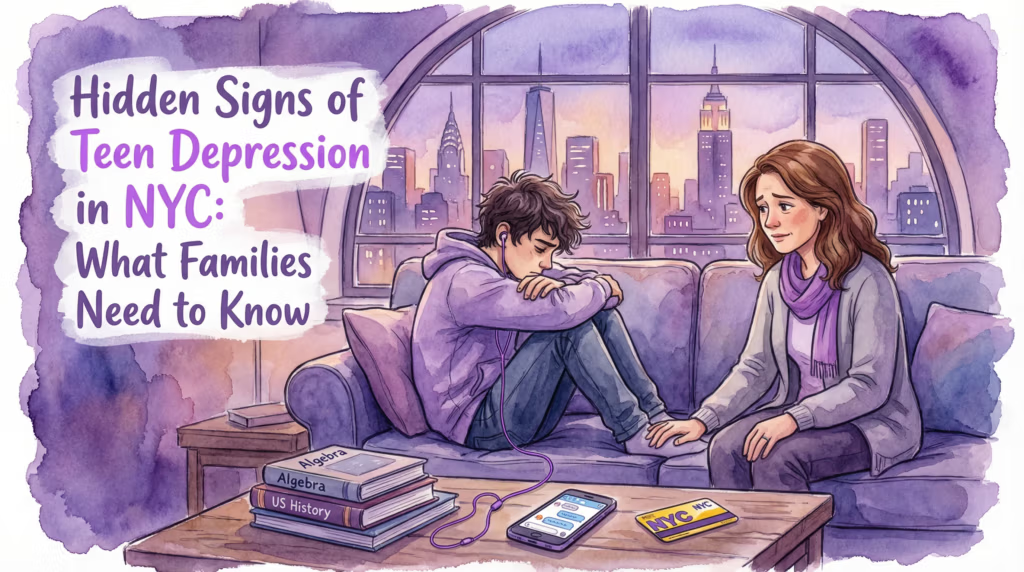
Teen depression is often imagined as obvious sadness and crying. In real life, many adolescents look more irritated than “down,” more exhausted than “tearful,” and more avoidant than “hopeless.” In NYC, this can be easy to miss because stress, late nights, competitive academics, and social media overload can make a struggling teen appear “typical teen” until functioning begins to slip.
We are going to break down hidden symptoms of teen depression simptoms, how they overlap with anxiety (including panic attacks in teens), and when it may be time to seek an evaluation with a teen anxiety psychiatrist NYC families can access in person or via telehealth.
If you are worried your teen may be in immediate danger or might harm themselves, call 988 (Suicide and Crisis Lifeline) or go to the nearest ER. You can learn more at the 988 Lifeline.
Why teen depression doesn’t always look like sadness
Adolescence is a period of major brain and body change, including sleep shifts, heightened emotional reactivity, and increased sensitivity to peer evaluation. Depression during this stage can show up less as “I feel sad” and more as irritability, shutdown, conflict, or somatic complaints.
Clinically, depression is also frequently mixed with anxiety in teens. The National Institute of Mental Health notes that depression can affect mood, thinking, and physical health, and symptoms can look different across people and ages. A teen may not have the words for hopelessness, but you may see it as “I don’t care,” “It’s pointless,” or refusal to engage. See the NIMH overview of depression.
NYC-specific stressors can intensify this presentation. Long commutes, packed schedules, high-achievement school environments, and constant comparison online can produce a chronic “always on” state. Many families also still see ripple effects from COVID-era disruption, including social skills gaps and health anxiety, themes described in this article on the psychological impact of lockdown.
Hidden symptoms of teen depression to watch for
Some symptoms are “loud” (crisis-level distress), but many are “quiet,” especially in high-functioning teens who keep grades up while suffering internally. Here are patterns clinicians commonly evaluate.
| Hidden symptom pattern | What it can look like at home or school | Why it matters |
|---|---|---|
| Irritability and anger | Snapping, arguing, “attitude,” rage episodes, frequent conflict | In adolescents, depression may present primarily as irritability rather than sadness |
| Social withdrawal | Canceling plans, eating alone, staying in the room, dropping clubs | Isolation can worsen mood and reduce protective support |
| Sleep changes | Late-night scrolling, insomnia, oversleeping, waking exhausted | Sleep disruption both mimics and worsens depression and anxiety |
| “Burnout” and low motivation | Can’t start homework, “brain fog,” giving up quickly, missing deadlines | May reflect depression, anxiety, ADHD, or a combination that needs careful sorting |
| Physical complaints | Headaches, stomachaches, nausea, frequent nurse visits | Somatic symptoms are common in anxiety and depression, and can drive school avoidance |
| Perfectionism and overcontrol | Meltdowns over small mistakes, avoidance unless guaranteed success | Often linked to anxiety and can evolve into a depressive collapse when pressure stays high |
| Appetite or weight shifts | Eating much less or more, a change in body image preoccupation | Can be mood-related or signal an eating disorder needing specialized care |
| Risk-taking or substance use | Vaping, cannabis, alcohol, unsafe situations, sudden new peer group | Sometimes a way to numb distress, and increases safety risk |
| Concentration problems | “Not listening,” forgetting, rereading, zoning out, test drops | Can be depression, anxiety, ADHD, sleep problems, or learning issues |
| Increased sensitivity and rejection pain | “Everyone hates me,” intense reactions to social stress, spiraling after conflict | Often overlaps with social anxiety and can drive avoidance and hopelessness |
A key point: the same teen can appear “fine” at school and fall apart at home or vice versa. That split is important data, not proof that nothing is wrong.
Depression or “normal teen moodiness”? What clinicians look for
Mood swings can be developmentally normal. What pushes concern into the clinical zone is typically a combination of duration, intensity, and impairment.
Signs it may be time for an adolescent mental health evaluation in NYC include:
- Symptoms lasting most days for 2 weeks or longer.
- Noticeable decline in school performance, attendance, or executive functioning.
- Pulling away from friends or previously valued activities.
- Regular physical complaints without a clear medical explanation.
- Increased conflict, irritability, or emotional “numbness.”
- Any self-harm behavior, suicidal talk, or statements like “you’d be better off without me.”
If you want a deeper overview of subtle presentations, see our related guide: Teen anxiety or depression? Subtle signs NYC parents often miss (and what helps).
When teen depression hides inside anxiety (panic attacks, social anxiety, and avoidance)
Many families first notice anxiety symptoms, not depression. A teen might complain of nausea before school, refuse presentations, or develop panic symptoms that look like a medical emergency.
Panic attacks in teens
Panic attacks can include racing heart, shortness of breath, chest tightness, dizziness, shaking, nausea, or a fear of “going crazy.” Teens often end up avoiding the places where they had an attack (school, subway, crowded hallways), which can snowball into isolation and depressed mood.
For practical, evidence-based approaches, read Panic attack treatments that actually help and Understanding anxiety and panic attacks: recognizing the signs and getting help.
Social anxiety in teen NYC families often misread
Social anxiety is not “shyness.” In NYC teens, it can show up as:
- Refusing to speak in class or eat in the cafeteria.
- Panic before tryouts, auditions, or presentations.
- Avoiding group chats, parties, or even close friends due to fear of judgment.
When avoidance shrinks a teen’s world, depression can follow quickly.
What an adolescent mental health evaluation NYC families should expect
A high-quality evaluation aims to answer two questions: What is happening? What will help specifically for this teen?
A comprehensive assessment with a teen depression psychiatrist NYC families trust often includes:
- A developmental and medical history, including sleep, appetite, energy, and any substance use.
- Screening for anxiety disorders, ADHD, trauma exposure, and mood disorders.
- Review of school functioning (grades, workload, accommodations, attendance patterns).
- Family history and current stressors.
- Safety assessment (self-harm, suicidal thoughts, access to lethal means).
Sometimes, targeted testing is appropriate to clarify attention, learning, or cognitive patterns.
- If attention and grades have dropped, or if your teen needs documentation for accommodations, psychoeducational testing may be helpful. See How psychoeducational testing can help.
- If the picture is more complex (attention, mood, memory, or executive function concerns), neuropsychological testing can provide a broader map of strengths and weaknesses. See What is a neuropsychological evaluation?.
Our team includes neuropsychology expertise, including work by Dr. Dana Haywood, PhD featured in our Cognitive Remediation Therapy educational series. You can start here: Cognitive Remediation Therapy (CRT) video series (this page links to our YouTube content).
Treatment options that actually move the needle
When parents search “therapy and medication for teen anxiety,” they are often looking for a plan that is both evidence-based and realistic for a busy NYC teen. Treatment is typically most effective when it is individualized, measured over time, and coordinated across home and school.
Psychotherapy (CBT, DBT, supportive therapy)
- CBT (Cognitive Behavioral Therapy) helps teens notice the thought-behavior loop that keeps depression and anxiety going, then practice skills to shift it.
- DBT skills can be especially helpful when there is emotional dysregulation, self-harm urges, intense conflict, or impulsivity.
Medication management when appropriate
Medication is not the first or only tool, but for moderate to severe depression, persistent anxiety, or debilitating panic, it can be a key part of recovery when carefully monitored.
Evidence from the large multi-site Treatment for Adolescents with Depression Study (TADS), published in JAMA, found that combination treatment (an SSRI plus CBT) improved outcomes for many adolescents compared with either approach alone. (See the JAMA publication record: TADS in JAMA.)
It is also important to know that antidepressants carry an FDA boxed warning about increased risk of suicidal thoughts and behaviors in some children, adolescents, and young adults, particularly early in treatment or with dose changes. This does not mean medication is “unsafe,” it means close follow-up and informed monitoring matter. Read the FDA’s guidance on suicidality and antidepressant drugs.
Sleep and circadian support
Sleep problems can both mimic depression and amplify it. If your teen’s mood worsens with late nights, insomnia, or irregular schedules, improving sleep can be a meaningful part of treatment planning. Our team has written about this in Can sleep heal more than we think?.
When attention or executive function problems are part of the picture
Some teens appear “unmotivated” when the real issue is attention, working memory, or executive function overload. That can happen with depression and anxiety, with ADHD, or with both.
- If you are considering a focused evaluation, see Private ADHD testing in NYC.
- If cognitive skills are a significant barrier (planning, focus, cognitive flexibility), cognitive remediation may be considered as part of a broader plan. Dr. Dana Haywood also discusses this work in our CRT video series.
How to talk to your teen (without escalating the moment)
If depression is hiding behind irritability, your teen may respond to concern with “I’m fine,” eye rolls, or anger. That does not mean they do not need help.
Try:
- Lead with observations, not labels: “I’ve noticed you’re sleeping a lot and skipping friends, and I’m worried.”
- Ask about function: “Is it harder to focus, get through the day, or feel like yourself?”
- Offer choice and privacy: “Would you prefer to start with therapy, an evaluation, or both?”
- Reduce the shame narrative: “Needing support is not weakness, it’s health care.”
If they disclose anything about self-harm, suicidal thoughts, or feeling unsafe, shift from conversation to action: contact crisis supports, your pediatrician, or a mental health professional urgently.
Finding a teen anxiety psychiatrist NYC families can access in Midtown Manhattan
If you are looking for NYC teen mental health care, it helps to choose a practice that can evaluate the whole picture, not just one symptom.
At Dr. Iospa Psychiatry Consulting, we provide comprehensive psychiatric care in Midtown Manhattan and via telehealth for New York. Our multidisciplinary approach may include psychotherapy (CBT, DBT, supportive therapy), medication management when appropriate, and testing services when attention, learning, or cognition are part of the concern.
Relevant starting points:
- Learn how psychiatrists approach mood conditions in a coordinated plan: The role of psychiatrists in treating depression
- If you suspect “hidden” depression signs in general: Depression treatment in Midtown NYC: how to spot the hidden signs
- For parents, earlier in the anxiety question: Childhood anxiety red flags every NYC parent should know
If you want to discuss next steps with a child and adolescent psychiatrist, Midtown Manhattan families can contact you to explore care options at Comprehensive Psychiatric Services in NYC and request an appointment for an adolescent evaluation.
Frequently Asked Questions About Teen Depression
What are the most common hidden symptoms of teen depression?
Teen depression often shows up as irritability, anger, withdrawal, sleep changes, physical complaints, burnout, or loss of motivation rather than obvious sadness. Many teens don’t describe feeling “depressed” but instead say they feel numb, exhausted, or overwhelmed.
Can teen depression look like anxiety or panic attacks?
Yes. Depression and anxiety frequently overlap in adolescents. Panic attacks, school avoidance, social withdrawal, perfectionism, and constant worry can all coexist with or mask underlying depression.
How can parents tell the difference between normal teen moodiness and depression?
Normal moodiness is usually short-lived and doesn’t significantly impair daily functioning. Depression is more likely when symptoms last for most days for two weeks or longer and interfere with school, friendships, sleep, or family life.
Why are NYC teens at higher risk for hidden depression?
NYC teens often face intense academic pressure, long commutes, packed schedules, social media comparison, and limited downtime. These stressors can normalize exhaustion and irritability, making depression harder to recognize.
When should a parent seek a mental health evaluation for a teen?
Parents should seek an evaluation if they notice persistent mood changes, withdrawal, declining school performance, frequent physical complaints, panic symptoms, or any talk of self-harm or hopelessness.
Can a teen seem “high-functioning” and still be depressed?
Absolutely. Many teens maintain grades and activities while struggling internally. High-functioning depression is common and often missed until stress overwhelms coping abilities.
Is medication always necessary for teen depression?
No. Treatment depends on severity. Mild to moderate depression may respond well to therapy alone, while moderate to severe depression or persistent anxiety may benefit from medication combined with therapy.
How does sleep affect teen depression and anxiety?
Sleep problems can both mimic and worsen depression and anxiety. Late nights, insomnia, and irregular schedules can significantly impact mood, focus, and emotional regulation in teens.
Can ADHD or learning issues look like depression in teens?
Yes. Attention, executive functioning, or learning difficulties can cause frustration, burnout, and low self-esteem that resemble depression. A comprehensive evaluation helps clarify what’s really going on.
What should parents do if they’re worried about teen safety?
If a teen expresses suicidal thoughts, self-harm behaviors, or feels unsafe, parents should seek immediate help by contacting 988 (Suicide & Crisis Lifeline), going to the nearest emergency room, or contacting a mental health professional urgently