
How ADHD looks different in professional women

Many corporate women don’t think “ADHD” because they are competent, high achieving, and often praised for being the one who holds everything together. Instead, they think “I’m burned out,” “I’m anxiou
Neuropsychological Testing Explained: What It Is, Who It Helps, and What to Expect
When you are struggling with focus, memory, or mental stamina, it can be hard to tell what is actually happening. Is it ADHD, anxiety, depression, burnout, a learning disorder, perimenopause, Long COV
Private ADHD Testing in NYC
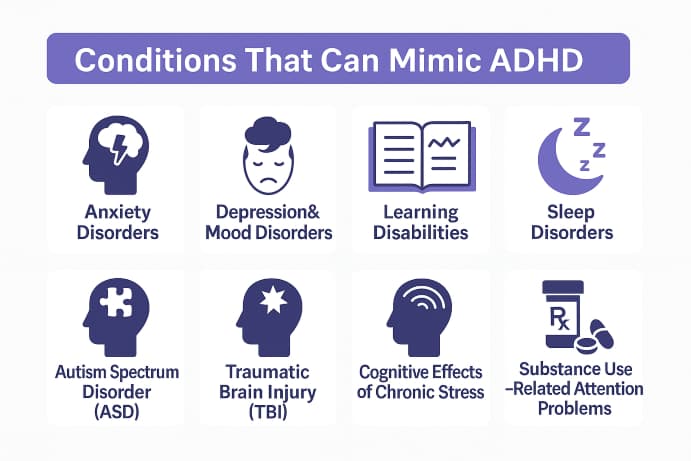
Fast, Accurate Answers with Dr. Iospa Psychiatry Consulting Group Struggling to focus, stay organized, or manage distractions? You’re not alone. ADHD affects children, teens, adults, and older professionals, and in the fast-paced world of New York City, it often goes undiagnosed. At Dr. Iospa Psychiatry Consulting Group, we provide private ADHD testing designed to deliver clear answers and personalized treatment plans. As a result, you gain the tools you need to take control of your well-being. Why Choose Private ADHD Testing in NYC If you often feel distracted, overwhelmed, or forgetful, ADHD may be a factor. Left unrecognized, it can affect your career, relationships, education, and mental health. However, the right evaluation can give you clarity and a plan to move forward with confidence. Here’s why many New Yorkers choose Dr. Iospa Psychiatry Consulting Group in Midtown Manhattan for private ADHD testing: Comprehensive, evidence-based evaluations led by experienced clinicians Confidential results handled securely to protect your privacy Fast, streamlined process with priority scheduling for self-pay clients Personalized treatment planning, including therapy, medication, and accommodations Unlike quick online quizzes or limited screenings, our process uses clinically validated tools and in-depth assessments. As a result, you receive an accurate diagnosis and a clear, actionable plan. In some cases, if your ADHD testing results are inconclusive, we may recommend a comprehensive neuropsychological evaluation. This allows us to confirm or rule out other conditions that can mimic ADHD, including: Anxiety disorders Depression and mood disorders Learning disabilities (dyslexia, dyscalculia, etc.) Sleep disorders Autism spectrum disorder (ASD) Traumatic brain injury (TBI) Cognitive effects of chronic stress Substance use–related attention problems Your results can also support school accommodations to improve academic performance, guide medication management with our psychiatrists, and inform targeted cognitive therapies designed to strengthen focus, organization, and emotional regulation. What’s Included in Private ADHD Testing Our ADHD testing process is thorough, structured, and designed around your needs: Detailed clinical interview and personal history review Standardized ADHD testing for attention, memory, and executive function Feedback session explaining strengths, weaknesses, and next steps Tailored treatment recommendations, including: Cognitive-behavioral therapy (CBT) Medication management with our psychiatrists School or workplace accommodations Flexible options: in-person Midtown NYC testing or secure online consultations Because we combine testing with personalized recommendations, you leave with clear answers and a plan instead of uncertainty. Who Benefits from ADHD Testing ADHD affects more than teens and college students. Our testing supports all age groups and life stages: Children experiencing challenges with attention or school performance Teens & young adults facing academic or social stressors Working professionals managing deadlines, meetings, and productivity demands Parents balancing home responsibilities, work, and family life Older adults struggling with memory, organization, or focus For example, an accurate diagnosis often helps professionals improve productivity, students access accommodations, and parents manage household demands more effectively. What Happens After Testing Your ADHD evaluation is only the first step. Once testing is complete, we help you turn insights into action: School accommodations — Reports can support IEPs, 504 plans, and classroom flexibility Medication management — Our psychiatrists customize treatment plans for your needs Cognitive therapies — Improve focus, organization, and emotional regulation Ongoing support — We monitor progress and adjust your treatment as needed Because our approach integrates testing and personalized care, you receive comprehensive support every step of the way. Book Your Private ADHD Testing in NYC Stop guessing. Start understanding. At Dr. Iospa Psychiatry Consulting Group, we provide expert, discreet ADHD evaluations in the heart of Midtown Manhattan — helping you take the next step toward clarity and control. In-person testing at our Convenient Midtown location Virtual consultations Immediate scheduling Take control of your focus, productivity, and well-being today. Contact Us to Schedule Your Private ADHD Evaluation Take the First Step Making the call can feel overwhelming. Your cognitive health deserves attention. Your peace of mind deserves answers. And your future deserves a plan. Contact US
Why Is Gen Z So Anxious?
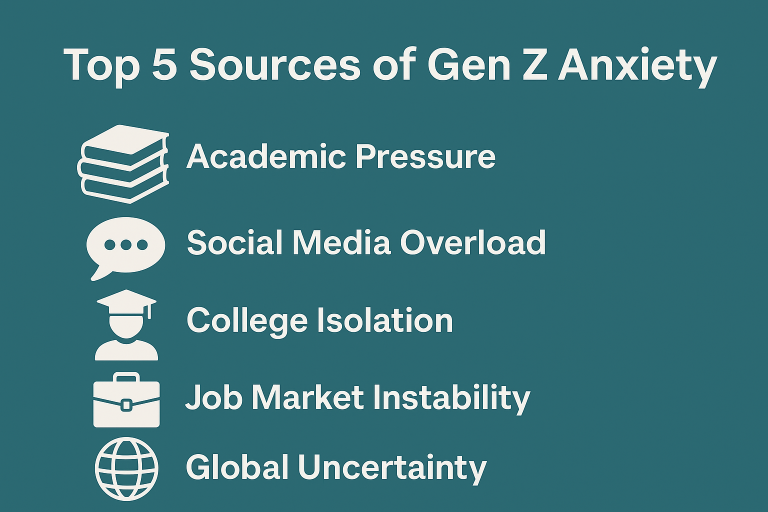
Why Is Gen Z So Anxious? Why You Feel Fried, Frozen, and Ready to Disappear by Tuesday If you’re tired of being told to “just breathe” while juggling 14 tabs, a college paper, and a crisis in the group chat — read this. You’re not weak. You’re not dramatic.And if you’re a parent, your kid isn’t just “going through a phase.” Gen Z is anxious for real, measurable, relentless reasons, and until we start naming them out loud, therapy and wellness tips won’t do much. As a psychiatrist who treats young adults every day, especially those who are high-functioning, ADHD-diagnosed (or not-yet-diagnosed), and totally overwhelmed . Let me walk you through what’s actually going on. It’s not just you. It’s the environment, the expectations, and the exhaustion — all happening at once. School Is Where Anxiety Started (And Never Stopped) Let’s rewind. A lot of Gen Z’s anxiety didn’t begin in college. It started with the pressure to succeed early. Honor classes before puberty. Tracking every grade. Constant feedback loops. Perfection masked as motivation. If you had ADHD — especially as a girl , your symptoms were probably missed because you were the “quiet, capable one.”But inside? You were masking, overworking, and burning out before senior year. By the time you hit college, you weren’t thriving. You were crashing with depression, executive dysfunction, or a sudden loss of drive. College Didn’t Bring Freedom. It Brought Free-Fall. College is supposed to be a fresh start, right?For many of our patients, it’s when anxiety and depression peak. No structure = executive chaos Social isolation = emotional flatline Unmedicated or misdiagnosed ADHD = serious academic struggle If you’re a student reading this and thinking,“I can’t concentrate, I’m constantly behind, I hate group work, and I dread emails,”— you’re not alone. That’s not laziness. It might be untreated ADHD plus academic trauma. Then Came the Job Market, And Panic Set In You did everything right. The grades. The resume. The unpaid internships. Now what? Entry-level jobs barely cover rent You’re expected to be emotionally available and hyper-productive You crave purpose, but the system rewards burnout And let’s be real: group Slack messages feel like landmines If you’re feeling anxious about the future — it’s not in your head.It’s baked into the economy and the culture. But that doesn’t mean you’re stuck. Social Media Isn’t Just a Distraction. It’s a Drain. It’s where you connect.It’s also where you get judged, perform, compare, and spiral. Social media doesn’t just amplify anxiety, it reprograms your nervous system to stay in a low-grade state of alarm. You’re “always on” You’re never enough You can’t turn it off because it’s also how you learn, laugh, organize, and feel seen This is especially brutal if you already have rejection sensitivity, emotional dysregulation, or impulsivity — all hallmarks of ADHD. ADHD, Anxiety, and the Diagnoses That Slip Through the Cracks Here’s where it gets real. ADHD in women, especially Gen Z women, is chronically underdiagnosed.Why? Because: You weren’t disruptive in school — just tired and perfectionistic You “managed” through planners, and internalized everything (cue anxiety + self-blame) You excelled — until you didn’t Many of our Gen Z clients come in with anxiety and leave finally understanding their ADHD.Once we treat the root — not just the symptom — things start to click. If you relate to this, and no amount of meditation, productivity hacks, or therapy-speak on TikTok has helped… it’s time to consider this deeper layer. What Actually Helps You don’t need more mindset tips. You need care that understands your brain, your schedule, and your reality. What works: Therapy that’s short-term goal-oriented (not endless venting) A psychiatrist who can assess for ADHD, anxiety, depression — and explain how they overlap Medication if needed — without shame, without pressure Tools like body doubling, executive coaching, CBT, emotional regulation strategies Flexible options — video, in-person, check-ins, accountability Parents: if your Gen Z child seems fine online but disconnected in person, don’t push. Get curious. Offer real support. And get them in front of someone who speaks their language. Want to Finally Get to the Root? At Dr. Iospa Psychiatry Consulting Group, we have experience in treating Gen Z. We know how to spot ADHD in women, how to untangle anxiety from burnout, and how to work with young adults who don’t have time for fluffy wellness trends. You get real tools. Real options. Real relief. Midtown NYC office appointments & virtual sessionsBook your consultation now. PS: TL;DR in Gen Z slang stands for: “Too Long; Didn’t Read” It’s internet slang for a quick summary of a long article
Evidence-Based Non-Medication Interventions for ADHD
Attention-Deficit/Hyperactivity Disorder (ADHD) affects both children and adults. It can make it harder to focus, stay organized, or manage impulses. Medication often helps, but it’s not the right choice for everyone. Some people experience side effects, have medical conditions that make medication unsafe, or prefer a more natural ADHD treatment. Fortunately, several evidence-based non-medication treatments for ADHD can help reduce symptoms. These options can be used on their own or in combination with medication for optimal results. In this article, we explore four key approaches: mindfulness, neurofeedback, and Cognitive Remediation Therapy (CRT)—plus simple lifestyle strategies you can start using right away. Why Consider a Combined or Alternative Approach? Stimulants and other ADHD medications are effective for many people. However, they can also cause side effects, such as trouble sleeping, loss of appetite, or irritability. Others may want to avoid long-term use of controlled substances or are looking for natural ADHD treatments that support the whole person. Non-medication ADHD therapies can: Offer options for those who can’t or don’t want to use medication Improve focus, organization, and emotional regulation Complement medication for better long-term outcomes Support a holistic, skills-based approach to managing symptoms For many, a combined treatment plan—comprising medication and behavioral or cognitive support—leads to the best results. 1. Computerized Cognitive Training (CCT) Computerized cognitive training utilizes software or apps to enhance brain functions, including attention, memory, and self-control. These programs use games and exercises designed to challenge thinking patterns that are often weaker in individuals with ADHD. How It Helps: Working memory: Tasks that involve remembering patterns or sequences build short-term memory strength. Attention: Activities that require sustained focus train the brain to avoid distractions. Impulse control: Interactive games help practice delayed gratification and better decision-making. Research indicates that CCT can enhance attention and executive functioning, particularly when used consistently over time. It’s a flexible, home-based tool that can be used alone or to enhance the benefits of medication. 2. Mindfulness Meditation Mindfulness teaches you to focus on the present moment without judgment. For individuals with ADHD, this practice helps improve attention span, emotional control, and awareness of impulses. How It Helps: Trains the brain to notice distractions without reacting to them. Reduces anxiety and emotional outbursts. Builds better self-regulation through daily practice. Getting Started: Begin with 5–10 minutes a day using an app like Headspace or Calm. Practice mindfulness during everyday activities like eating or walking. Pair meditation with medication or therapy for greater emotional control. Studies have shown that mindfulness can significantly reduce symptoms of inattention and impulsivity, particularly when practiced consistently. 3. Neurofeedback Neurofeedback is a brain-training method that helps people learn to regulate their brainwave patterns. It uses real-time feedback, often visual or auditory, to encourage focus-friendly brain states. How It Works: During a session, you might play a video game that only works when you stay focused. Over time, your brain learns to maintain those patterns on its own. Benefits: Improves attention and impulse control. Results can last well beyond the training period. Often used alongside medication for better self-regulation. Though it requires a commitment of 20–40 sessions, many people find neurofeedback to be a powerful and lasting tool in their ADHD treatment toolbox. 4. Cognitive Remediation Therapy (CRT) CRT uses structured exercises to build skills in attention, memory, and executive functioning. It’s especially helpful for children and adults who struggle with planning, time management, or staying organized. How It Helps: Improves sustained attention through targeted mental challenges. Strengthens working memory and task completion. Builds problem-solving and decision-making abilities. CRT can be used as a standalone treatment or in conjunction with medication, mindfulness, or neurofeedback. When combined, these approaches support both the biological and behavioral aspects of ADHD. Practical Strategies You Can Use Right Away Along with structured therapies, small daily changes can make a big difference: 1. Build a Structured Environment Use visual schedules and digital reminders. Break big tasks into smaller, achievable steps. 2. Create Predictable Routines Set regular times for meals, work, exercise, and sleep. Stick to consistent transitions between tasks. 3. Move Your Body Exercise boosts focus and reduces hyperactivity. Try yoga, swimming, walking, or martial arts. 4. Use Helpful Tech Tools like StayOnTask, ReVibe, or visual timers keep you on track. 5. Support Emotional Regulation Practice deep breathing, journaling, or talking through feelings. Encourage self-compassion and patience. A Holistic, Personalized Approach Managing ADHD isn’t about one-size-fits-all solutions. It’s about creating a personalized, holistic plan that fits your needs. Non-medication treatments, such as cognitive training, mindfulness, neurofeedback, offer proven ways to build focus, manage emotions, and enhance daily functioning. These strategies can be used on their own or combined with medication for more comprehensive and lasting results. If medication alone isn’t working, or if you’re looking for natural ADHD solutions, these approaches are worth exploring. Always talk with a healthcare provider before making changes to your treatment. With the right tools, structure, and support, individuals with ADHD can thrive—in school, at work, and in life.
ADHD and Migraine
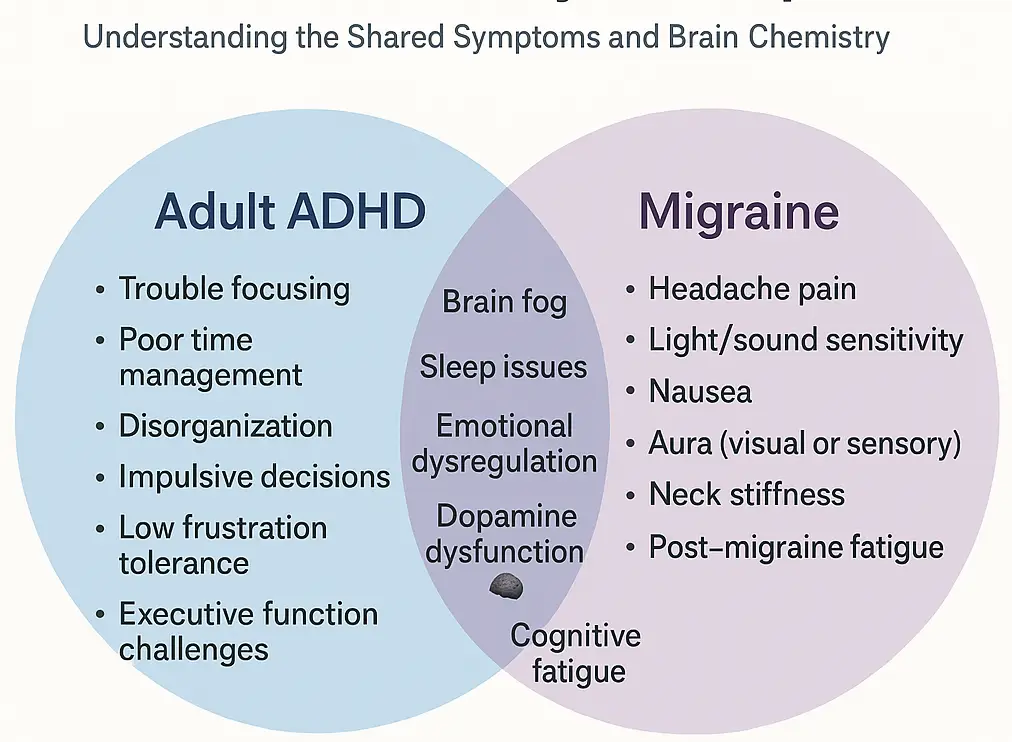
Migraines and Mental Fog? It Might Be Undiagnosed Adult ADHD If you deal with migraines, struggle with focus and memory, feel mentally exhausted, or find it difficult to manage everyday tasks, you may be dealing with more than just stress. These symptoms are often signs of Adult ADHD, a condition that impacts executive function and is frequently overlooked in adults. Research suggests there may be a direct link between Adult ADHD and migraine, especially when both affect how your brain processes pain and attention. With proper neuropsychological testing and support through medication management, many people find lasting relief. A German study published in the Journal of Attention Disorders found that adults with ADHD are more than twice as likely to suffer from migraines, especially migraine with aura, the kind that begins with flashing lights or tingling sensations. If you’re managing both migraine pain and brain fog, this connection could be the missing piece. ADHD and Migraine: What’s the Link? Both conditions involve the brain’s dopamine system, which plays a role in attention, mood, and how we process pain. Disruptions in dopamine may explain why Adult ADHD and migraine often occur together. If you’ve been treating migraines but still feel mentally drained, undiagnosed ADHD might be a contributing factor. Symptoms That Often Overlap Here are common signs of Adult ADHD that are often missed, especially when migraine symptoms dominate: Difficulty focusing or finishing tasks Struggles with focus and memory Poor time management and organization Mental fatigue or overwhelm Emotional sensitivity or irritability Sleep disruption or racing thoughts These issues can impair daily functioning and are frequently misdiagnosed as stress, depression, or anxiety, especially in high-achieving students and professionals. For those experiencing migraines, too, the root cause might lie deeper in executive function challenges. Why Executive Function Matters Executive function refers to the brain’s ability to plan, prioritize, and regulate emotions and behavior. In people with Adult ADHD, executive dysfunction is common. When combined with migraine, this can amplify struggles at work, in school, and at home. You may find it hard to stay on task, meet deadlines, or even remember appointments—all while battling debilitating headaches. Understanding and treating executive dysfunction is key to long-term improvement. What Is the Role of a Psychiatrist? If you suspect Adult ADHD or a link between your migraines and mental health, a psychiatrist is the best place to start. Psychiatrists are medical doctors trained to diagnose and treat disorders like ADHD, anxiety, and chronic pain conditions. They take a whole-person approach, considering how various conditions interact. A psychiatrist will: Conduct a structured clinical interview and gather medical history Order or interpret neuropsychological testing to clarify your diagnosis Identify if your symptoms are due to Adult ADHD, migraine, or both Offer medication management tailored to your brain chemistry Coordinate with therapists, neurologists, or primary care physicians as needed At our Midtown Manhattan practice, medication decisions are made carefully and collaboratively. Patients may work with psychiatrists such as Dr. Alla Iospa, MD, Dr. Konstantin Nikiforov, MD, Dr. Yana Serobyan, MD, DO, and Dr. Elizabeth Zharovsky, MD The Role of Neuropsychological Testing Neuropsychological testing helps uncover patterns in attention, memory, and decision-making. It’s especially useful when symptoms are complex or overlapping, such as when migraine and Adult ADHD coexist. Testing might include: Attention and memory assessments Executive functioning tasks Problem-solving evaluations Processing speed and emotional regulation testing Results guide your psychiatrist in choosing the right treatment plan. For many adults, seeing a psychiatrist is the first step toward understanding not just why they have migraines, but why they feel chronically unfocused, disorganized, or emotionally overwhelmed. Treatment Options That Address Both Conditions Managing Adult ADHD and migraine often requires a multi-pronged approach. Our psychiatrists At our Midtown Manhattan practice, medication decisions are made carefully and collaboratively. Patients may work with psychiatrists such as Dr. Alla Iospa, MD, Dr. Konstantin Nikiforov, MD, Dr. Yana Serobyan, MD, DO, and Dr. Elizabeth Zharovsky, MD might recommend: Medication management with stimulants, non-stimulants, or migraine-safe drugs. Behavioral therapy or ADHD coaching Sleep and stress management strategies Tools and apps to improve focus and memory Coordinated care with neurologists for migraine-specific treatments The goal is to reduce symptoms from both conditions without making the other worse. For example, some migraine medications may worsen ADHD symptoms, and vice versa. A psychiatrist can help balance both. Clarity Starts with the Right Diagnosis If you’ve been struggling with migraines, brain fog, or attention problems, Adult ADHD could be the key to understanding it all. You deserve answers that go beyond pain relief. With help from a psychiatrist and insights from neuropsychological testing, you can begin a treatment journey that improves both your executive function and quality of life. Don’t wait until the next migraine or missed deadline to take action. Schedule a comprehensive ADHD evaluation today and start feeling better tomorrow.
ADHD In women.|| YouTube video announcement
Many women live with ADHD for years without realizing it. Unlike the classic image of a hyperactive boy disrupting class, ADHD in women can look very different. Symptoms are often more subtle and are frequently dismissed as stress, anxiety, depression, or even personality flaws. In our latest video, Dr. Dana Haywood, PhD, breaks down how ADHD manifests in women, why so many cases go undiagnosed, and what to do if you suspect ADHD might be affecting you or a loved one. Why ADHD in Women Is Often Missed Hormonal influence: Shifts in estrogen and progesterone—during puberty, menstrual cycles, pregnancy, and menopause—can affect dopamine and ADHD symptom expression. Masking: Many women unconsciously develop coping strategies to hide their struggles, such as over-preparing, perfectionism, or people-pleasing. Societal expectations: Women are often expected to stay organized, emotionally regulated, and attentive to others. When they struggle, they may blame themselves instead of suspecting ADHD. Misdiagnosis: Symptoms are often attributed to anxiety, depression, or stress, leading to years of treatment without addressing the underlying ADHD. Common Signs of ADHD in Adult Women While each person’s experience is unique, some patterns are more common in women: Inattention rather than hyperactivity → daydreaming, zoning out, or feeling mentally “foggy” Emotional dysregulation → frequent mood swings, heightened sensitivity, or irritability Executive function struggles → trouble with planning, organization, time management, and prioritizing tasks Forgetfulness → missing deadlines, losing items, forgetting conversations, or feeling “scattered” Chronic overwhelm → feeling like everyday responsibilities pile up faster than they can be managed High-functioning masking → appearing capable on the outside while internally exhausted from constant effort ADHD in Women vs. Men Research shows that ADHD tends to present differently by gender: Men/boys are more often diagnosed with hyperactive-impulsive symptoms. Women/girls are more likely to show inattentive symptoms, which can be mistaken for lack of motivation. Because of this difference, men are usually diagnosed earlier, while women may not receive recognition until adulthood—often after a child is diagnosed and they recognize the same patterns in themselves. What To Do If You Suspect ADHD Track your symptoms: Keep notes on where you struggle—focus, organization, time, emotions. Consult a professional: A neuropsychological evaluation or ADHD-focused assessment can clarify whether ADHD is the root issue. Seek support: Therapy, coaching, medication, and lifestyle strategies can help. Reduce self-blame: Remember, ADHD is neurological, not a character flaw.