
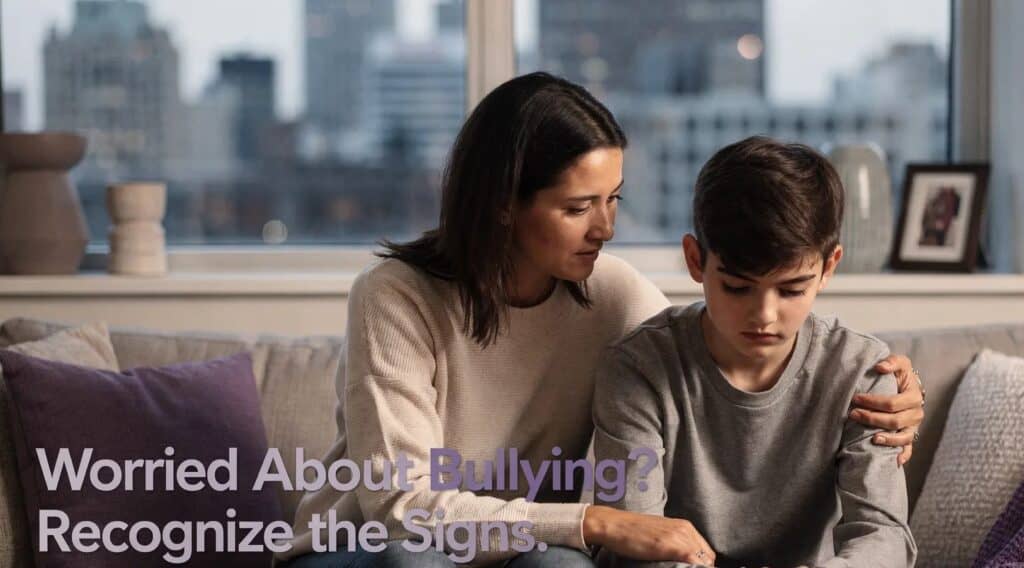
Many NYC parents search for help when their child suddenly refuses school, develops anxiety, or behaves differently. If you notice a child being bullied at school, behavior changes in NYC parents may not always realise these are often the first signs of bullying-related trauma. Bullying can be “just a tough part of growing up” until it isn’t. In NYC schools, many children keep bullying quiet because they feel ashamed, fear retaliation, or worry that adults will make it worse. When a child is bullied at school, NYC begins acting differently, and parents often notice behavior changes before learning what happened.
Most parents don’t start by asking, “Is this bullying?” They notice their child dreading school, complaining of stomachaches, becoming withdrawn, or unusually anxious. Those changes are often the first signs that something serious is happening.
From a trauma-informed lens, repeated bullying can function like chronic stress or trauma exposure. It can change how a child’s nervous system responds to everyday situations, especially school. If you’ve found yourself thinking, “My child is afraid to go to school,” it is worth taking seriously.
This guide is written for NYC parents who want clear, practical warning signs, next steps, and guidance on when a child trauma psychiatrist in NYC, whom families trust, may be appropriate.
Why bullying can become trauma, and why NYC kids may mask it.
Bullying is not only a social problem. For some kids, it becomes a mental health risk factor. The CDC notes that bullying is linked with negative outcomes, including depression, anxiety, and sleep difficulties, and it affects both targets and those who bully others. A child bullied at school in NYC may develop anxiety, sleep problems, or school avoidance.
In NYC specifically, students often contend with added stressors:
- Competitive academic environments and high-stakes testing
- Long commutes and early school days
- Social media exposure, group chats, and public “pile-ons” that follow them home
- Crowded school settings where conflicts escalate quickly
Kids also “mask” for survival. Many children try to appear fine at school and fall apart at home, or the reverse.
Mental health warning signs parents shouldn’t ignore
A trauma-informed approach focuses less on “What’s wrong with you?” and more on “What happened to you, and what’s happening in your body and mind now?” Bullying-related stress can show up across emotions, behavior, thinking, and physical symptoms.
1) School avoidance, nurse visits, and sudden “mystery” symptoms
Many children don’t say they’re being bullied. They present with headaches, stomachaches, nausea, dizziness, or panic-like symptoms on school mornings.
This pattern is common in anxiety, but it can also be consistent with trauma responses. If symptoms reliably improve on weekends or holidays, it’s a signal to look at school stressors.
Related reading: Childhood Anxiety Red Flags Every NYC Parent Should Know
2) Emotional shutdown after bullying (the “freeze” response)
Some kids do not become tearful or angry. They become quiet, numb, or “checked out.” You may notice:
- Short answers, flat affect, limited eye contact
- Spending long periods alone in their room
- Loss of interest in friends, sports, or activities they used to enjoy
This can reflect depression, anxiety, trauma-related dissociation, or simply overwhelm. The key is a noticeable change from baseline.
3) Irritability, aggression, or getting into trouble at school
Bullying, anxiety, and depression in teens often look like irritability, defiance, or sudden disciplinary issues. A child who feels unsafe may:
- Snap at parents or siblings
- Argue more, break rules, or “dare” authority
- Start fights, especially in hallways, bathrooms, buses, or online
This may reflect an externalizing stress response, not merely “bad behavior.”
Related reading: Teen Anxiety or Depression? Subtle Signs NYC Parents Often Miss (and What Helps)
4) Sleep changes and nightmares
Trauma and chronic stress often disrupt sleep. Watch for:
- New insomnia or frequent night wakings
- Nightmares (sometimes not obviously about school)
- Refusing to sleep alone, suddenly wanting parents nearby
Sleep problems can worsen mood, attention, and impulse control, and can make school days feel unmanageable.
5) Drop in grades, concentration problems, or “ADHD-like” symptoms
A bullied child may appear inattentive, forgetful, or disorganized because their brain is scanning for danger rather than learning. If attention problems are new or dramatically worse, it may be stress-related, trauma-related, ADHD, or a combination.
If school performance has shifted, a structured evaluation can clarify the drivers of the change.
- For academic and learning questions, see: Psychoeducational Testing for ADHD and Learning Disabilities (Midtown Manhattan)
- For broader cognitive and emotional functioning, see: What Is a Neuropsychological Evaluation?
6) Self-esteem changes, shame, and social withdrawal
Self-esteem after bullying can deteriorate quickly. Kids may say things like:
- “Everyone hates me.”
- “I’m annoying.”
- “I’m stupid.”
They may stop asking to see friends, quit teams, or avoid birthday parties. This is especially concerning if your child previously enjoyed social connections.
7) Panic symptoms or fear spikes around specific triggers
Some children experience panic-like episodes associated with school, a specific hallway, a class, or a peer. Panic can include chest tightness, trembling, nausea, shortness of breath, and feeling like something terrible is about to happen.
If these symptoms are happening, a professional evaluation can help you sort out anxiety, panic, trauma reactions, and medical contributors.
Related reading: Panic Attack Treatments That Actually Help
Bullying-related PTSD symptoms in children: what they can look like
Not every bullied child develops PTSD, but some develop clinically significant trauma symptoms. The NIH’s NIMH overview of PTSD describes core symptom clusters such as re-experiencing, avoidance, negative mood and cognition changes, and hyperarousal. In children, these may present differently.
Here is a practical, parent-focused map:
| What do you notice at home | What it might mean | A helpful next step |
|---|---|---|
| “My child is afraid to go to school,” begging, crying, or refusing | Avoidance, fear conditioning, panic, trauma response | Ask about specific situations (where, when, who), and coordinate safety steps with the school |
| Sudden anger, snapping, or “acting different.” | Hyperarousal, threat sensitivity, shame | Normalize feelings, set calm limits, and consider therapy evaluation |
| Numbness, withdrawal, “I don’t care,” blank stare | Freeze response, depressive symptoms, dissociation | Gentle check-ins, reduce pressure to “perform,” professional assessment if persistent |
| Nightmares, insomnia, startle response | Hyperarousal, trauma-related sleep disruption | Stabilize sleep routine, screen time boundaries, and seek treatment if ongoing |
| Stomachaches/headaches before school | Somatic anxiety, trauma triggers | Rule out medical causes, then address school stressors and coping skills |
What parents can do now (trauma-informed, NYC practical)
You do not need the perfect words. You need safety, steadiness, and a plan.
Start with a conversation that reduces shame
Try:
- “I’ve noticed school mornings have been really hard. I’m not mad, I want to understand.”
- “You don’t have to tell me everything at once. We can take it step by step.”
- “What’s the hardest part of the day, lunch, gym, the bus, the hallway, or online?”
Avoid rapid-fire questions or pushing for details when your child is shut down. In trauma-informed care, pacing matters. Not every child bullied at school will talk about it directly.
Document and loop in the school strategically
Bullying often improves faster when adults coordinate. Consider:
- Writing down dates, locations, screenshots, and witnesses
- Asking for a meeting with the guidance counselor, dean, or administration
- Requesting a safety plan (supervision points, seat changes, buddy system, arrival/dismissal adjustments)
If you are navigating formal supports, testing can help clarify needs for accommodations.
Helpful explainer: Neuropsychological vs Psychoeducational Testing: What’s the Difference & Which Do You Need?
Stabilize the basics (sleep, body, routine)
Trauma symptoms often intensify when a child is sleep-deprived, overstimulated, or isolated. Focus on:
- Consistent bedtime and wake time
- Predictable after-school decompression
- Regular meals and hydration (blood sugar swings can mimic “mood issues”)
- Movement (walks, sports, stretching) without pressure to “talk while doing it”
When to consider a child trauma psychiatrist in NYC
A trauma-informed child psychiatrist can be helpful when symptoms are persistent, escalating, or impairing your child’s functioning at school, at home, or socially.
Consider scheduling an evaluation if:
- School refusal is growing, or your child is frequently leaving early
- You see ongoing PTSD symptoms in children (avoidance, hyperarousal, shutdown) for weeks
- Anxiety or depression symptoms are worsening, including hopelessness or self-hate statements
- Your child’s behavior has shifted dramatically (aggression, risk-taking, substance use)
- There are attention or learning changes, and you need diagnostic clarity
In a comprehensive, trauma-informed evaluation, clinicians typically look at:
- Symptom timeline (before bullying vs after)
- Home, school, and social functioning
- Sleep and medical factors
- Safety risk (self-harm, suicidality)
- Whether therapy, medication management, and/or testing could help
If you are looking for care in Midtown Manhattan, child psychiatry, or telehealth in New York, Dr. Iospa Psychiatry Consulting offers in-person and remote services through a multidisciplinary team. You can learn more about the practice here: Comprehensive Psychiatric Services in NYC.
How treatment can help, without forcing your child to relive it
Trauma-informed treatment should not feel like an interrogation. It should first build stabilization skills, then process experiences in a paced, safe way.
Depending on your child’s needs, a plan may include:
- Psychotherapy (commonly CBT, DBT-informed skills, supportive therapy) to target anxiety, mood symptoms, emotion regulation, and coping
- Medication management when symptoms are moderate to severe, persistent, or limiting daily functioning (medication is never the only tool, but it can reduce symptom intensity so therapy works better)
- Neuropsychological or psychoeducational testing if bullying coincides with academic decline, attention concerns, or accommodation needs
If cognitive functioning has been affected by chronic stress, some families also explore cognitive skill-building approaches. Dr. Dana Haywood, a neuropsychologist on the team, has shared educational content related to cognition and treatment supports.
- Watch the practice’s Cognitive Remediation Therapy YouTube series announcement: Cognitive Remediation 3-Part Series Videos released on YouTube
- Related reading featuring Dr. Dana Haywood: Worried About Memory Loss? Why Building a Cognitive Baseline Matters
When symptoms are urgent, do not wait.
Seek immediate help if your child:
- Talks about wanting to die, self-harm, or “not being here.”
- Has made a suicide attempt or is engaging in self-injury
- Is experiencing severe aggression, impulsive danger, or inability to function
In NYC, you can contact NYC Well for 24/7 crisis support and referrals. If you believe your child is in immediate danger, call 911 or go to the nearest emergency room.
Frequently Asked Questions
Can bullying cause PTSD in a child? Yes, bullying can be experienced as traumatic, especially when it is severe, repeated, humiliating, or includes threats or physical harm. Some children develop PTSD-like symptoms such as avoidance, hypervigilance, sleep disruption, and emotional shutdown.
What are PTSD symptoms in children that parents often miss? School avoidance, irritability, “numbing,” sudden withdrawal, nightmares, frequent stomachaches, and a jumpy startle response can be missed because they look like attitude, puberty, or “stress.”
Should I take my child to a child trauma psychiatrist in NYC or start with therapy? Many families start with therapy, but a child trauma psychiatrist NYC parents consult can be especially helpful when symptoms are severe, persistent, involve safety concerns, or when medication management and diagnostic clarity are needed.
Could bullying be causing ADHD-like symptoms? Chronic stress can impair attention, memory, and executive function. Testing and a comprehensive evaluation can help differentiate stress effects from ADHD or learning disorders, and guide school accommodations.
What if my child refuses to talk about bullying? Start with safety and stabilization, not details. Offer choices, when and where to talk, and use gentle check-ins; consider a trauma-informed clinician who can build trust gradually.
Next step: get specialized, trauma-informed support in NYC
If your child is showing warning signs after bullying, you do not have to figure this out alone. If your child is bullied at school and shows persistent emotional or behavioral changes, a professional evaluation may help. Dr. Iospa Psychiatry Consulting provides comprehensive psychiatric care in Midtown Manhattan and via telehealth in New York, including therapy, medication management, and testing when appropriate.
Explore services and request an appointment with Dr. Iospa Psychiatry Consulting. Consider related evaluations if school performance has been affected, such as psychoeducational testing or neuropsychological evaluation.